
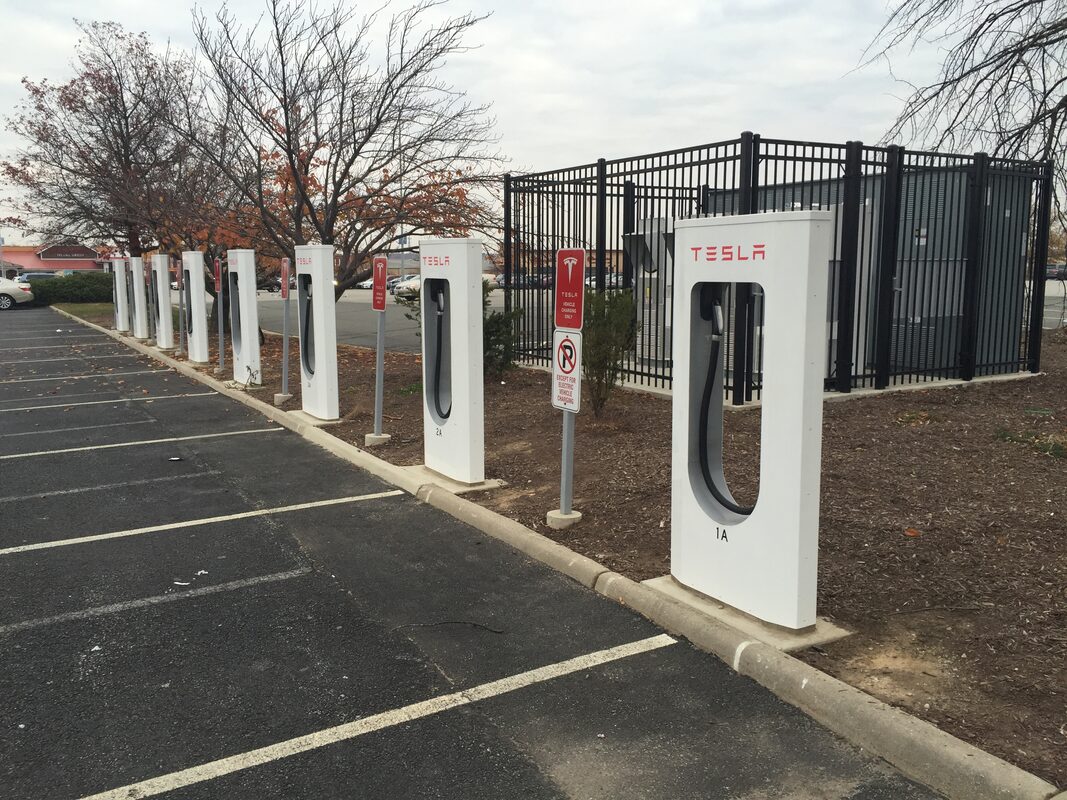
Farms and rural small businesses can no longer use Rural Energy for America Program (REAP) grants to pay for electric vehicle chargers. USDA's Rural Business-Cooperative Service published a final rule with comment period in the Federal Register on Oct. 1, 2026 (91 FR 62600, FR Doc. 2026-20178). The rule took effect on Oct. 16, four days ago. Its public comment period is still open and closes Nov. 2, 2026, 13 days from today.
The rule, titled "Unleashing American Energy and Economic Prosperity; Rural Energy for America Program (REAP)," changes more than eligibility. Applicants now have to build their project and run it before they apply, and USDA bases awards on documented output or energy savings. Grant ceilings are lower, and state-level competitions give way to a national one.
What the rule says about charging
The rule names charging equipment directly: "To streamline program administration, flexible fuel pumps, electric vehicles, electric vehicle chargers and charging stations are identified as not eligible."
It also ties chargers to an existing restriction on selling energy to the public: "Examples of dispensing energy at retail that are not eligible includes electric vehicle chargers or charging stations and flexible fuel pumps." The ban on systems that dispense energy at retail was already part of REAP; the rule says that prohibition "was moved from the definition section to the section discussing eligibility to make the information easier to find," and it now names EV chargers as an example.
Several other project types are also excluded. The rule bars solar and wind systems on cropland, stand-alone energy storage, retrofits that add storage to an existing renewable energy system, and solar photovoltaic systems or wind turbines with any component made in a country named as a foreign adversary, with an exception for projects completed before the rule was published. It also makes multilocation projects ineligible.
Build first, apply later
Under the new structure, "projects must already be fully built and operational before the applicant ever applies," the rule states. The project must be completed 12 to 24 months before the application date; for the first application window after the rule, that range extends to 12 to 36 months. Each application must include 12 months of actual energy production or savings data plus 12 months of pre-installation data, and USDA bases awards on that documented performance.
The financial terms changed as well. According to Ag Bull Trading, the new grant ceilings are half the previous maximums:
| Maximum grant request | Before the rule | Under the rule |
|---|---|---|
| Renewable energy systems | $1 million | $500,000 |
| Energy efficiency improvements | $500,000 | $250,000 |
The minimum request for either type of project is now $1,500. Applicants must cover at least 75 percent of project cost through cost sharing, which limits the grant to 25 percent, and combined REAP grant and guaranteed loan funding cannot exceed 75 percent of project cost.
The rule replaces the previous mix of state and national competitions with one competition for requests of $20,000 or less and one national competition for all other applications. To make up for the loss of state competitions, USDA will first select the highest-scoring application from each state, or the top two when more than $100 million is available, before funding the rest in rank order. No application scoring below 40 points will be funded.
How the program got here
The rule refers to a USDA stakeholder announcement issued on March 31, 2026, that discontinued processing of pending REAP applications while the agency rewrote the program. Moving the project period ahead of the application date lets applicants with pending applications resubmit, provided they meet the new requirements. Applications with a Form 1940-1 "Request for Obligation of Funds" signed by both the applicant and USDA before the effective date will continue to be processed, as long as the project remains in line with applicable terms and conditions.
Because USDA issued the measure as a final rule with comment period, it is already in force while the agency takes public comments. USDA could revise it after reviewing those comments. The rule's own explanation for the charging exclusion is that it is intended "to streamline program administration."
What It Means for Drivers
REAP grants are off the table for chargers at farms, rural stores and other small rural businesses. Any new charger a rural host adds now has to be paid for without REAP grant money.
Drivers, site hosts and others can submit comments through the Federal eRulemaking Portal, regulations.gov, under Docket No. RBS-26-Business-0529, until Nov. 2, 2026. A host that already had a charger project in a REAP application should check whether it has a Form 1940-1 signed by both parties before Oct. 16. That signature is the line between an application USDA keeps processing and one that falls under the new rules.
Sources
- Federal Register: Unleashing American Energy and Economic Prosperity; Rural Energy for America Program (REAP), final rule with comment period (Oct. 1, 2026)
- Ag Bull Trading: USDA Rewrites REAP, Requiring Farmers to Build Before Seeking Grants (Sept. 30, 2026)
- Asuene: USDA REAP Final Rule 2026: New Eligibility Rules and Application Requirements
